RSVP for 2026 Jewelry Show in Events tab

When most people think of pearls, they picture a classic white strand—timeless, elegant, and universally flattering. But freshwater pearls offer something even more special: a spectrum of natural colors, each with its own story, origin, and level of rarity.
Understanding these colors not only helps you choose the right piece—it deepens your appreciation for what makes pearls so unique.
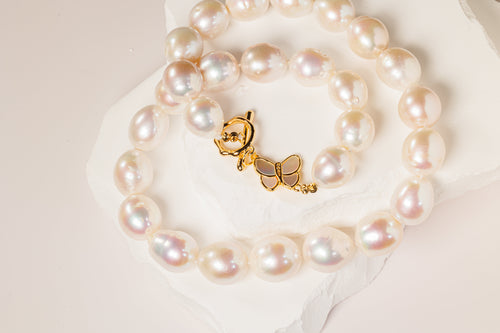
White pearls are the most traditional and widely recognized.

What creates the color:
White pearls form when nacre (the layers secreted by the mollusk) reflects light evenly across its surface. Subtle overtones—like rose, silver, or ivory—come from how light interacts with microscopic layers.
Rarity:
⭐ Common, but high-quality white pearls with strong luster and clean surfaces are not common.
Why they matter:
They are the foundation of any jewelry collection—effortless, versatile, and always appropriate.
Pink & Peach Pearls: Soft and Feminine

These romantic tones range from barely-there blush to warm peach.
What creates the color:
Natural pigments within the mollusk, combined with light interference in nacre layers, produce these warm hues.
Rarity:
⭐ Fairly common in freshwater pearls—but naturally saturated pinks (not dyed) are more rare.
Why they stand out:
They complement skin tones beautifully and feel softer and more personal than white pearls.
Lavender & Purple Pearls: Unique and Understated
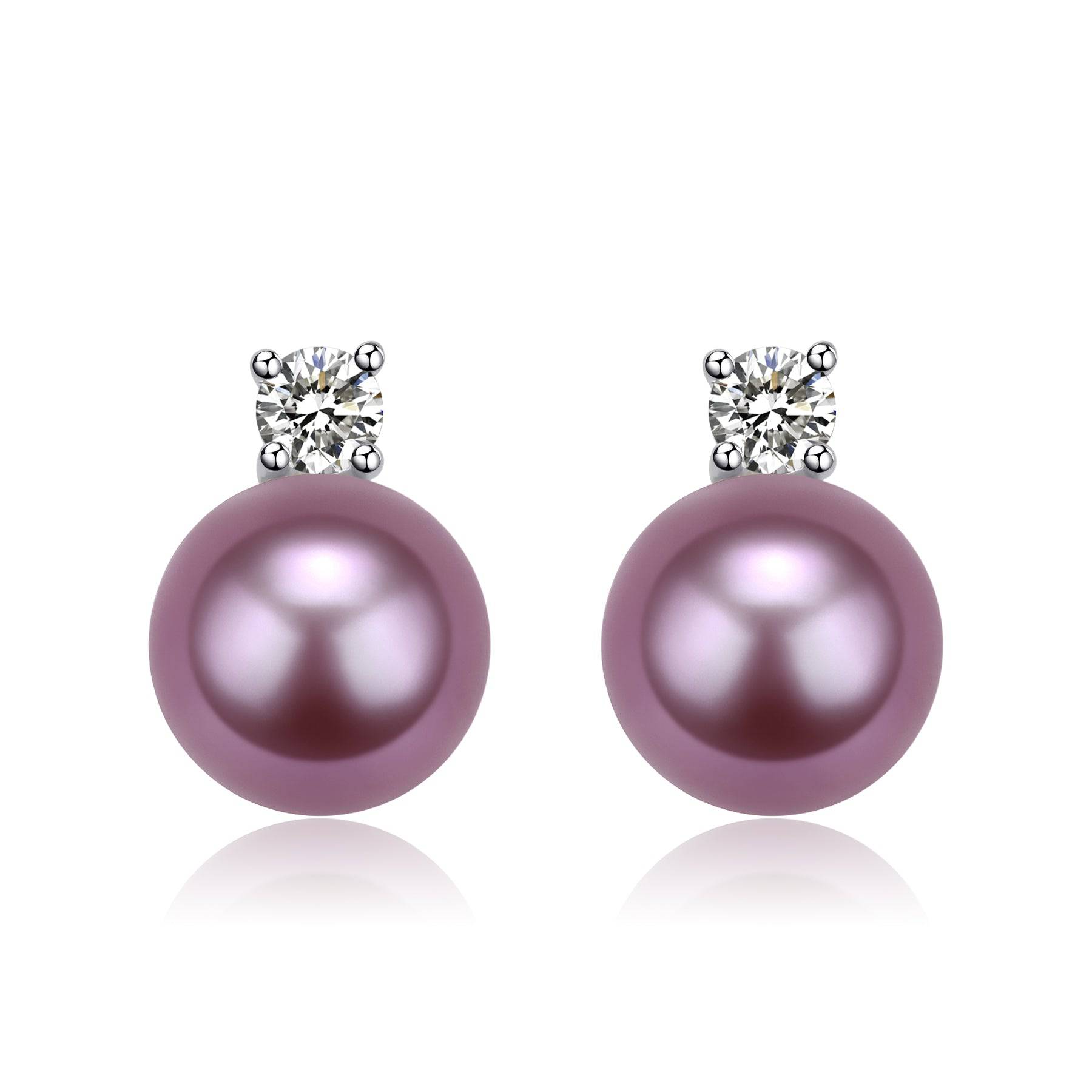
Lavender pearls are one of freshwater pearls’ signature colors.
What creates the color:
Trace elements and natural variations in nacre deposition create this cool-toned purple spectrum.
Rarity:
⭐ Moderately rare—especially even, soft lavender tones with high luster.
Why they’re special:
They feel modern yet refined—perfect if you want something different without being loud.
Metallic & Iridescent Pearls: The Hidden Gems
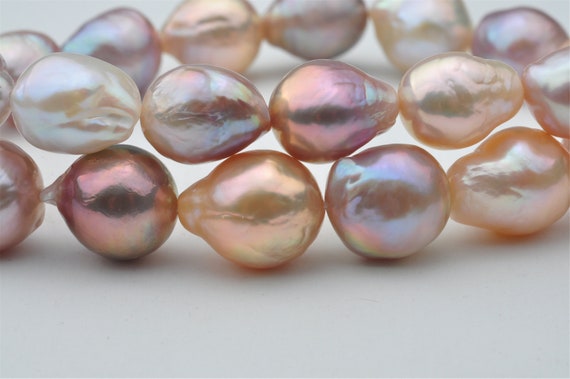
These pearls shimmer with rainbow-like reflections—almost mirror-like.
What creates the color:
Exceptionally dense and smooth nacre layers reflect light intensely, creating metallic luster and iridescent overtones.
Rarity:
⭐ Rare and highly sought after, especially in baroque shapes.
Why collectors love them:
They feel alive—each pearl reflecting light differently, making every piece one-of-a-kind.
✨ What Truly Determines Rarity in Pearls?
Color is just one part of the story. The most valuable freshwater pearls are defined by:
- Luster (the sharpness of reflection)
- Surface quality (fewer blemishes)
- Shape (round vs baroque)
- Size
- Natural vs treated color
A rare color with poor luster is still less valuable than a common color with exceptional quality.